When people get in touch to install an air conditioning unit, the first thing they usually say is, “I know it blows out cold air, but how does it actually work?” It is a fair question. Air conditioning feels almost instant when you switch it on, yet there is quite a bit going on behind the scenes.
With UK summers getting warmer and more humid, more homeowners and property managers across Southampton and Hedge End are looking at cooling as a practical investment rather than a luxury. Understanding how your system works not only helps you use it properly, it also helps you spot issues early and make better decisions about upgrades and maintenance.
The basic principles: heat transfer, refrigerant and airflow
At its core, air conditioning is not about “creating cold”. It is about moving heat from inside your property to the outside. That is all it does, but it does it very efficiently.
There are three main ideas that make it happen:
- Heat transfer – Warm air from the room is drawn into the system. The heat from that air is absorbed and carried outside.
- Refrigerant – This is a special fluid that changes between liquid and gas very easily. It is the key to absorbing and releasing heat.
- Airflow – Fans move air across internal components and circulate cooled air back into the room.
If you think of it like a fridge, you are not far off. In fact, the principles are almost identical. The main difference is that instead of cooling a small closed box, you are cooling a living space or office.
Key components of an air conditioning system and their roles
Most homes we work in around Southampton use what is called a split system. If you are not sure what that means, here is a straightforward explanation of what a split system air conditioner is and how it is set up.
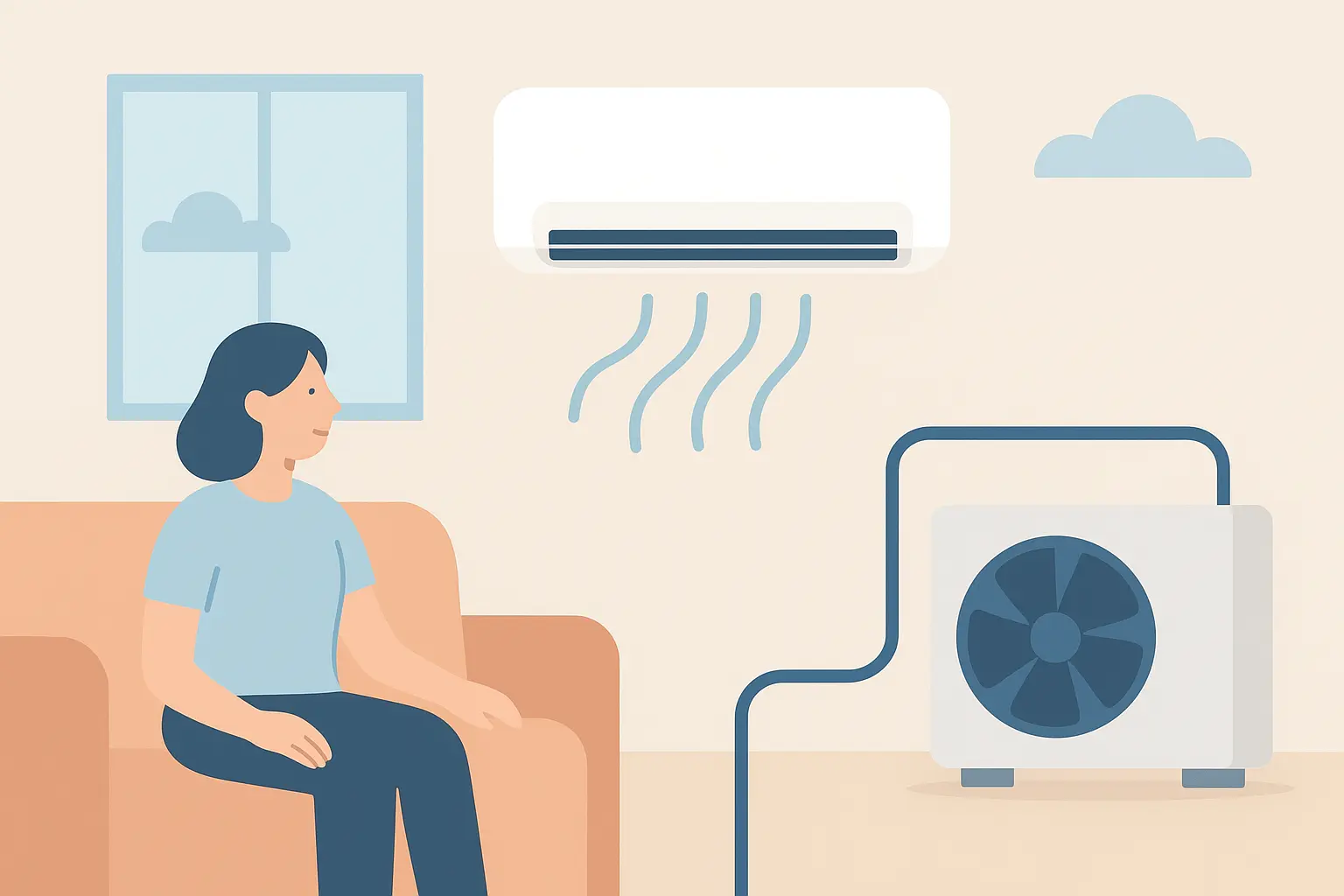
A typical split system has two main parts:
- An indoor unit mounted on the wall or ceiling
- An outdoor unit that sits outside the property
Inside those units, you will find a few key components:
Evaporator coil
This sits inside the indoor unit. Warm air from the room passes over the evaporator coil. The refrigerant inside the coil absorbs heat from that air, which makes the air cooler before it is sent back into the room.
Compressor
The compressor is in the outdoor unit. It pumps the refrigerant around the system and increases its pressure, which raises its temperature and prepares it to release the absorbed heat outside.
Condenser coil
Also in the outdoor unit, the condenser coil releases the heat carried by the refrigerant into the outside air. That is why you can often feel warm air blowing from an external unit when it is running.
Expansion valve
This small but important component controls the flow of refrigerant into the evaporator coil. It reduces the pressure of the refrigerant so it cools down enough to absorb more heat from indoors.
It sounds complicated on paper, but once you break it down, each part has a clear job.
The cooling cycle explained step by step
Let’s walk through what actually happens when you turn your system on during a warm afternoon in Hedge End.
- Warm air is drawn in – The indoor unit pulls in air from the room through a filter.
- Heat is absorbed – The air passes over the cold evaporator coil. The refrigerant inside absorbs the heat, cooling the air.
- Cool air is blown back – The fan pushes the cooled air back into the room.
- Heat is carried outside – The refrigerant, now carrying the absorbed heat, travels to the outdoor unit.
- Heat is released – At the condenser coil, the heat is released into the outside air.
- The cycle repeats – The refrigerant cools down again and the process continues until the room reaches the temperature you have set.
Modern systems also remove moisture from the air during this process. That is why a room feels fresher and less sticky, not just cooler. In places like Southampton where humidity can creep up, that dehumidifying effect makes a noticeable difference.
Benefits of understanding how your system works
You do not need to be an engineer to own air conditioning, but a bit of knowledge goes a long way.
Firstly, you are more likely to use it efficiently. For example, setting the thermostat to 16 degrees will not cool the room faster. It just makes the system run harder for longer. A sensible set point, usually around 21 to 23 degrees in summer, is more comfortable and more economical.
Secondly, you are better placed to spot problems. If the unit is blowing air but the room is not cooling, it could be low refrigerant or restricted airflow from a clogged filter. We often find filters in rental properties that have not been cleaned in months. A quick clean can make a big difference.
For property managers, especially those overseeing flats or small office spaces, understanding the basics helps when tenants call with concerns. You can ask the right questions before arranging a visit.
When to consider professional installation or maintenance
While it is useful to understand the principles, installing and servicing air conditioning is not a DIY job. Refrigerant is regulated in the UK and must be handled by certified engineers.
If you are considering a system in Southampton or Hedge End, planning is key. The size of the room, insulation levels, window orientation and existing electrics all play a part. I have seen units fitted that are too small for open plan extensions, meaning they run flat out and still struggle on hotter days.
If you are curious about what is involved from a practical perspective, this overview of how to install home air conditioning units explains the main stages without getting too technical.
Even if you already have a system, annual servicing is worth it. We check refrigerant levels, clean coils, flush condensate drains and test electrics. It is usually those small maintenance jobs that prevent mid summer breakdowns.
If you still have questions about how air conditioning works or you are weighing up whether it is right for your property, you can get expert advice or request a quote please feel free to get in touch with our team. The team at Becketts Plumbing and Heating are always happy to talk things through in plain English and help you find a setup that suits your home or building.
Understanding the basics takes the mystery out of it. Once you know it is simply moving heat from inside to outside in a controlled way, it all starts to make sense.