If you have been looking into air conditioning installation for your home or small business, you have probably come across the term “split system”. It is one of the most common types of air conditioning we fit across Southampton, Winchester and Hedge End, yet many people are not completely sure what it actually means.
In this guide, we will explain in plain English what a split system air conditioner is, how it works and whether it could be the right option for your property.
Introduction to split system air conditioners
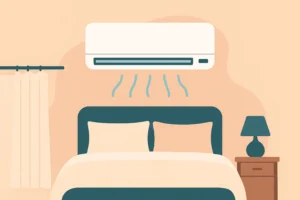
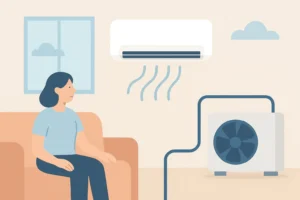
A split system air conditioner is made up of two main parts. One unit sits inside the building and one unit sits outside. They are connected by insulated pipework and electrical cables, hence the name “split system”.
The indoor unit is usually mounted high on a wall, though ceiling mounted options are available for offices or shops. The outdoor unit sits on a solid base outside, often at the side or rear of a property.
We install these systems in everything from Victorian terraces in Southampton to newer developments around Hedge End. They are neat, efficient and do not require the bulky ducting that you often see in large commercial buildings.
How a split system air conditioner works
At first glance it can seem complicated, but the basic principle is straightforward. A split system moves heat from inside your property to the outside.
The indoor unit draws warm air across a cold coil. The refrigerant inside that coil absorbs the heat, cooling the air before it is blown back into the room. The absorbed heat is then carried through the pipework to the outdoor unit, where it is released into the outside air.
In heating mode, the process is reversed. This is something many homeowners are pleasantly surprised about. Most modern split systems are air source heat pumps, meaning they can both cool in summer and provide efficient heating in winter.
For small business owners, this flexibility is a real plus. We often hear from shop owners in Winchester who want their premises comfortable all year round without installing separate systems for heating and cooling.
Benefits of choosing a split system
There are several reasons split systems have become so popular in UK homes and small commercial spaces.
- Energy efficiency. Modern systems are very efficient and can be cheaper to run than older electric heaters.
- Heating and cooling in one unit. Ideal for our increasingly warm summers and still chilly winters.
- Quiet operation. Indoor units are generally very quiet, which is important in bedrooms or offices.
- No extensive ductwork. Installation is less invasive than full ducted systems.
- Zoned comfort. You can control the temperature in individual rooms if you have multiple indoor units.
A lot of homeowners tell us they are mainly thinking about hotter summers. Last year alone we had plenty of calls after the first proper heatwave hit Southampton. Bedrooms on the top floor can quickly become uncomfortable, and a well sized split system makes a noticeable difference.
Businesses benefit too. Staff productivity and customer comfort both improve when the temperature is steady and controlled rather than relying on fans and open windows.
Installation considerations and maintenance tips
Choosing the right location
Positioning matters. The indoor unit should be placed where air can circulate freely across the room, not directly above a wardrobe or tucked into a tight alcove. We also take time to think about where the outdoor unit will go so that it is accessible for servicing and does not cause unnecessary noise near a neighbour’s fence.
In some areas such as parts of Winchester, you may need to consider planning restrictions if the property is listed or in a conservation area. This is something worth checking early on.
Getting the sizing right
One of the most common mistakes is choosing a system that is either too small or too large. Too small and it will struggle to cool the space on hot days. Too large and it can cycle on and off too frequently, reducing efficiency.
We always calculate the room size, insulation levels and even factors like large south facing windows before recommending a unit.
Ongoing maintenance
Split systems are fairly low maintenance, but they are not fit and forget. Filters should be cleaned regularly, especially in shops or offices where dust builds up faster. An annual service keeps the system running efficiently and helps prevent unexpected breakdowns during peak summer months.
If you are unsure what servicing involves, you can find more information on our air con blog section which covers common issues and maintenance advice.
Is a split system right for your home or business?
If you want a straightforward, efficient way to control temperature in one room or several, a split system is often an excellent choice. It works well in houses where adding ductwork would be disruptive, and in small businesses that need reliable year round comfort.
For homeowners in Southampton, Winchester and Hedge End, we are seeing a steady increase in demand as summers become warmer and expectations around home comfort change. Often it starts with one room, then clients decide to add another indoor unit later on.
Every property is slightly different though. The best way to know for sure is to have an experienced engineer assess your space and talk through how you use it day to day. At Becketts Plumbing and Heating, we take the time to explain options clearly and recommend what genuinely suits your building and budget.
Contact us today to get a quote for your new air conditioning system and professional installation.